
Supply Chain Security in 2026: The SBOM Layer Is Broken

The supply chain security market has quietly split in two. On one side, prevention: stop the bad package before it reaches a developer. That is the work Yeeth Security already does with Argus at the Open VSX registry boundary, where we catch malicious IDE extensions before they reach a search result — the same work that earned Yeeth Security a place in the Open VSX Security Hall of Fame. On the other side, a much larger set of organizations is stuck further downstream. They have to ship software, comply with disclosure rules, and answer questions from customers and regulators about what is in their products. Those organizations need more than prevention. They need to generate an accurate software bill of materials (SBOM), reconcile the conflicting findings from ten different tools, decide what actually has to be fixed, prove they fixed it, and do it again for every release.
That downstream problem is becoming unavoidable. The EU Cyber Resilience Act (CRA) requires manufacturers to identify and report the components in their products, maintain vulnerability handling processes, and provide security updates for the supported lifetime of the product. The United States Executive Order 14028 and the subsequent CISA Secure Software Development Attestation push federal suppliers toward SBOMs, provenance, and verifiable build practices. Neither regulation is optional, and neither is satisfied by a single scanner. Both require a repeatable software supply chain workflow that connects SBOM generation, vulnerability enrichment, VEX triage, remediation, and attestation across releases — the same workflow gap we mapped out in our CISO guide to IDE security.
That second problem is where the real friction is in 2026, and it is the one the first page of “supply chain security” barely addresses. Search the term and you find frameworks, SCA tools, SBOM generators, and vendor homepages. Most of them solve one slice well. Almost none of them solve the handoff between slices. The result is a generation gap: organizations can produce a software bill of materials, but they cannot reliably turn it into a clean bill of health for a release.
This gap is not an accident. It is the consequence of a market where every software supply chain signal lives in a different tool with a different API, a different data model, and a different idea of what a finding means. CVE scanners disagree on severity. License scanners disagree on declarations. SBOM generators disagree on component identity. Provenance tools disagree on artifact boundaries. Security teams spend more time reconciling tooling than they do fixing issues, and engineering teams learn to treat SBOM workflows as a compliance tax rather than a quality signal.
The fix is not another standalone scanner. It is an integration layer that treats the SBOM as a living object: generated once, enriched by many providers, reconciled into a single set of decisions, and remediated through automated or agent-driven workflows. That is the direction Yeeth Security is building toward in Argus: not to replace the scanners, but to orchestrate them into a single vulnerability management and remediation workflow.
The SBOM workflow nobody talks about
A modern release cycle, seen from the security team’s desk, looks like this:
-
Generate. Run Syft, cdxgen, Microsoft SBOM Tool, or another generator against a container image, a git repository, or a build artifact. Get a CycloneDX or SPDX file. Discover immediately that the tool missed something another tool would have found.
-
Enrich. Feed the SBOM into Grype, OSV-Scanner, Trivy, Snyk, or a license scanner. Get back a list of CVEs, license conflicts, and deprecated dependencies. Discover that two scanners flag the same vulnerability under different identifiers with different severity scores.
-
Reconcile. A human opens four dashboards and tries to decide which findings are real, which are duplicates, which are exploitable, and which are false positives. This is where most SBOM programs stall.
-
Triage. Mark some issues as not affected, some as under investigation, some as fixed in the next release. Produce VEX statements. Hope the format matches what customers expect.
-
Remediate. File tickets, update dependencies, rebuild, regenerate the SBOM, re-run the scanners, and prove the issue is gone. If the fix is straightforward, it should be automated. If it needs judgment, it should be routed to the right owner with context.
-
Attest. Sign the result, store provenance, and hand the evidence bundle to a customer, auditor, or regulator.
Each step is already served by open-source tools. The hard part is making them work as a single workflow. Today they do not. They produce overlapping, contradictory artifacts that security teams have to glue together with scripts, spreadsheets, and ticket systems.
That fragmentation is the actual supply chain security problem for most organizations. It is less dramatic than a malicious IDE extension campaign, but it is far more common, and it is where budgets and engineering time are being wasted right now. Until the SBOM workflow becomes a connected pipeline rather than a collection of handoffs, software supply chain security will keep under-delivering on the promises regulators and customers are now demanding.
Why the tool market is fragmented
The fragmentation is structural. Each tool was built for a narrow job:
- SBOM generation: Syft, cdxgen, Microsoft SBOM Tool, trivy sbom.
- Vulnerability scanning: Grype, OSV-Scanner, Trivy, Snyk.
- License and copyright: ScanCode Toolkit, FOSSology.
- Policy evaluation: OPA, Conftest.
- VEX triage: vexctl, CycloneDX VEX.
- Signing and provenance: Cosign, Sigstore, in-toto.
No single vendor can own all of these well. The open-source tools are better than anything a single company will build. But using them together means normalizing their outputs, versioning their containers, managing their configurations, and keeping an evidence trail of what ran when. That orchestration layer is what most organizations do not have.
The result is a collection of partial solutions. A company might have a great SCA scanner and no generation pipeline. Another has software bills of materials in a filing cabinet and no reconciliation. Another has policy-as-code but no way to map findings back to releases. Each team invents its own glue, and the glue becomes the product.
This is where an open integration layer becomes valuable. Not by replacing the scanners, but by defining a common contract for artifact identity, findings, policy, and remediation so the scanners can be plugged in, swapped out, and reasoned about together.
What an integrated SBOM layer looks like
At Yeeth Security we are building this layer inside Argus. The design follows a few principles.
Adapters, not replacements. Each open-source tool is wrapped behind a common adapter interface: generation, enrichment, license, policy, VEX, provenance. The tool does what it does best. Argus owns the orchestration, the canonical data model, and the evidence chain.
Observation retention. When two scanners disagree, both opinions are kept. The canonical SBOM is the reconciled view; the original tool output is stored as an observation with confidence metadata. This matters for audit defense and for debugging why two tools saw different things.
Release as the unit of work. An SBOM is not a document you generate once and forget. It belongs to a product release, tied to a build ID, commit SHA, artifact hash, and the execution environment that produced it. Security is tracked per release, not per file.
VEX as a workflow. VEX statements are not afterthoughts. They are triage decisions with status, justification, reviewer, expiration, and supersession. The system tracks which vulnerabilities are affected, fixed, under investigation, or not affected, and why.
Agent-driven remediation. Not every issue can be auto-fixed, but many can be routed. We are adding org-owned agents that receive SBOM completion events via signed webhooks and return remediation actions or VEX statements. A security team can plug in an internal automation, an MCP server, or a manual triage queue without losing the audit trail.
Argus malware signal as a supply-chain input. The same scanning pipeline that catches malicious IDE extensions on Open VSX can also flag a component in an SBOM. A malware verdict, a YARA match, or a suspicious publisher becomes another observation attached to the release.
Why the registry still matters — but as one signal among many
The prevention argument is not wrong. Yeeth Security still runs Argus against every upload to Open VSX, and we still believe malicious packages should be stopped before they reach developers. But that is one signal in a much larger supply-chain picture. An organization that ships software also has to worry about vulnerabilities in legitimate components, license obligations, deprecated dependencies, misconfigured containers, and tampered build artifacts.
The real opportunity is to bring those signals together. An SBOM generated from a release should already include what the registry knew about its components. A registry-level block should flow into the vulnerability model. A malware finding should be reconciled with the CVE data. The point is not to pick one layer. It is to stop treating each layer as a separate product category.
What this means for the first page of supply chain security
Most of what ranks for “supply chain security” is still framed as prevention or discovery: find the bad package, patch the vulnerable dependency, scan the manifest. That is a necessary part of the story, but it is not the whole story. The larger problem is operational: once you know what is in your software, how do you make it clean enough to ship, prove it, and keep it clean across releases?
That operational problem is where the software supply chain security market is fragmented and where the next category leader will be made. Organizations do not need another point solution. They need a control plane that can absorb signals from many providers, normalize them into a release-level view, and drive remediation through policy and agents.
Yeeth Security is building that control plane in Argus. We started at the IDE extension registry because it was the fastest way to prove that prevention at the source works, and we documented the playbook in our threat-intel reporting on campaigns like GLASSWORM and Francesca898. The next chapter is SBOM generation, vulnerability enrichment, VEX triage, and remediation — the workflow that turns raw material into a decision a security team can actually act on.
Supply chain security should be measured by how fast an organization can move from “we have an SBOM” to “this release is clean.” That is the gap worth closing.
 Threat Intel
The SadiqShuaibu campaign: 6 fake npm dependency checkers that embed a GitHub token and run remote code
Checking npm package versions is one of the most common things a developer extension does. Six of them showed up from one publisher in un...
Read Briefing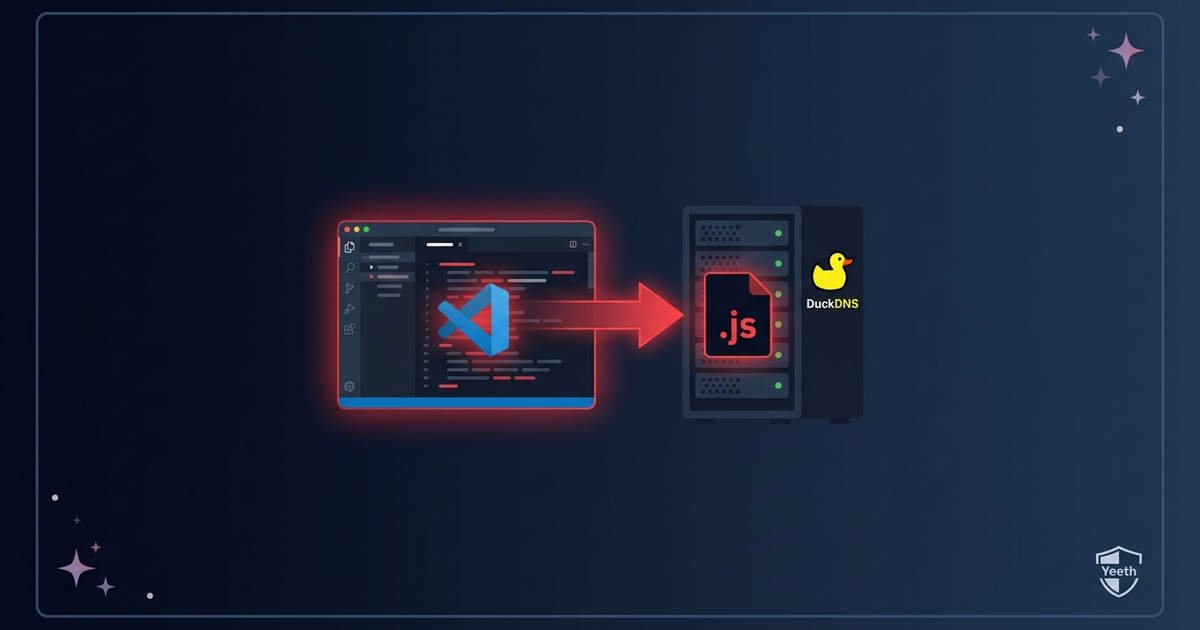 Threat Intel
The roqueue-tools DevFlow campaign: 2 fake project-flow extensions that fetch JavaScript from a DuckDNS host and run it
Two project-flow extensions sit quietly for five minutes after you open your editor. Then they reach out to a free DuckDNS subdomain over...
Read Briefing Threat Intel
Copilot for KeyBank — a 3 KB VSIX that beacons through github-cdn.net and waits for eval
A single-file VS Code extension on the Microsoft Marketplace impersonates Copilot, DeepSeek, PyPI and KeyBank. On activation it phones gi...
Read Briefing